
Jang Dong-min in The Devil’s Plan 3: the Jang–Oh alliance and The Genius
Compare Jang Dong-min’s opening-match win and choice of Oh Hyun-min with The Genius partnership and Society Game 2 leadership, using reported games and revised survival rules.
Spoilers for Dead Again episodes 1–10 game outcomes, alliance developments and earlier shows / No Season 3 championship result
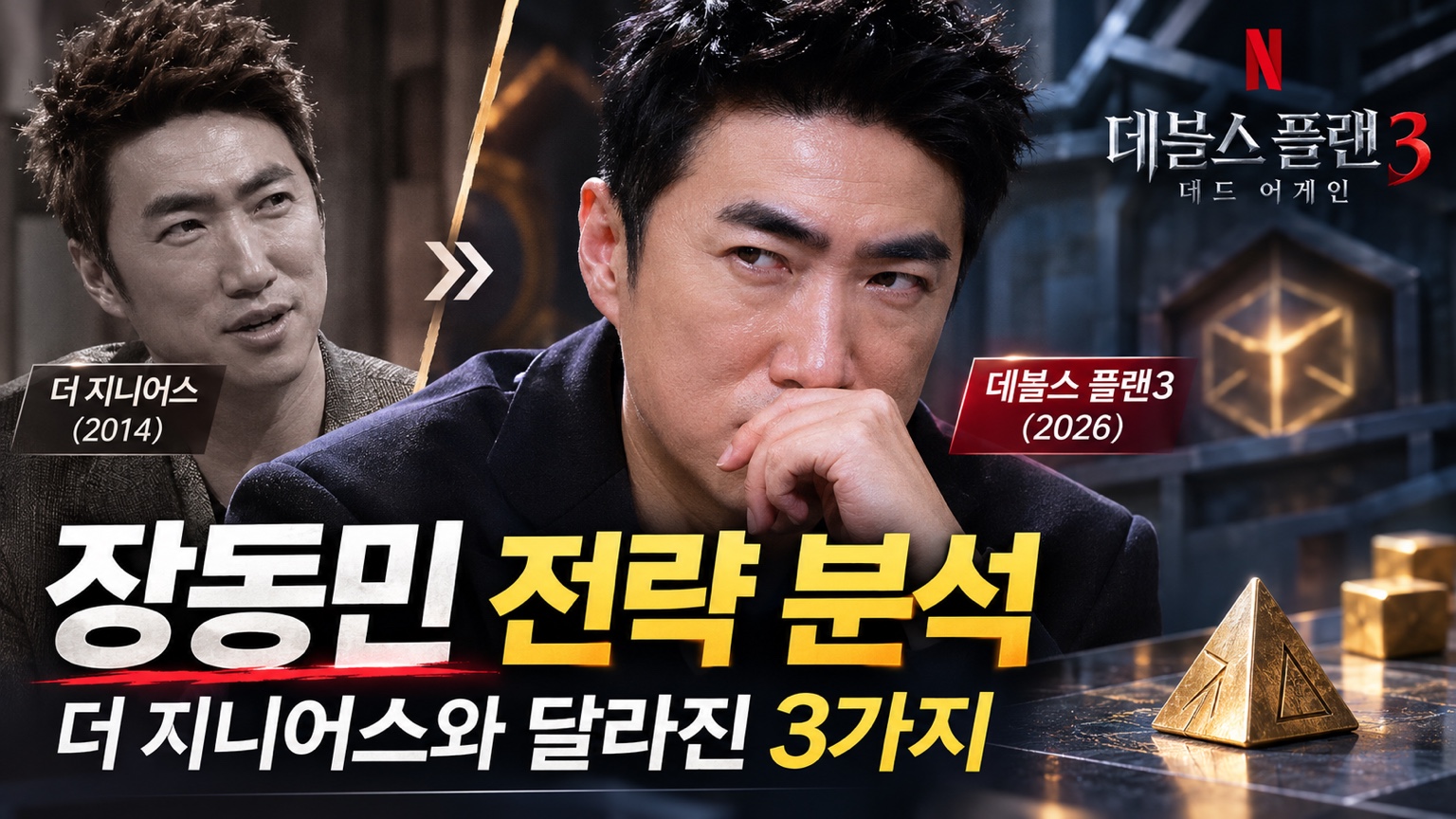
Reading Jang Dong-min’s strategy through the choice after a win
Is Jang Dong-min’s strongest asset in The Devil’s Plan 3 his ability to solve a game, or his ability to organize people? Episodes 6–10, released on November 17, 2026, complicated the relationship between the Living Area and the Prison Area, while Exile offered eliminated contestants another opportunity.
His reunion with Oh Hyun-min also invites comparison with The Genius. Can a familiar partnership work in the same way when opponents recognize it? This essay uses official material, press-conference statements and published coverage to compare the situations. Factual claims are cited; the strategic interpretation is STARSCOPE’s analysis.
Spoiler notice: Includes game outcomes and alliance developments from episodes 1–10 of Dead Again, plus historical program context. This is research-based analysis, rather than a scene-by-scene account based on direct viewing. Unverified details are omitted. The Season 3 championship result is not included.
1. The first match shows why the next choice matters
The first main match, “Yangja Taegil,” placed public interest against personal advantage. Enough participants choosing the public interest would add to the collective prize; otherwise, personal-interest choices were rewarded. [2]
Etoday reported that Jang finished first in this opening main match and used the authority he gained to bring Oh Hyun-min into the Living Area. [1]
The analytical point lies in what followed the win. A result can provide more than an immediate score: it can change whom a player is able to cooperate with in the next stage. This does not establish Jang’s private intentions, but it offers a concrete basis for examining the relationship between competitive success and access to allies.
One useful reading of his play is to consider the conditions and relationships left behind after each game, alongside the victory itself.
2. What the Jang–Oh alliance recalls from The Genius
Jang and Oh formed a partnership in The Genius: Black Garnet, which aired in 2014. tvN’s official final preview presented them as a formidable alliance now facing each other for the championship. [3]
That combination matters: partners can cooperate and still be competitors for the final prize. An alliance should therefore be examined as an arrangement serving each participant’s objectives, rather than assumed to be permanent.
The official Dead Again trailer introduction makes the familiar partnership a target of other players’ plans. [4] Repeating an effective arrangement becomes a different problem when opponents are already prepared to respond to it.
At the November 5 press conference, Oh asked viewers to keep in mind that there is no permanent team in survival competition. [5] That statement supplies context for watching relationships change, rather than proof that a specific later action was betrayal.
3. Episodes 6–10 change the problem for the Living Area
On November 18, bntnews reported that episodes 6–10 featured Prison Area players challenging the Living Area centered on Jang, alongside cracks and changes within the Living Area itself. [6]
A strong ally may be useful early on, but incentives can change as the field develops. Even a group sharing an immediate goal must eventually confront the fact that the competition has one champion.
This shifts the analytical question from building a capable group to maintaining workable relationships while facing outside pressure. Those are related skills, but success at one does not automatically demonstrate the other.
Building a strong alliance and responding when it becomes unstable are different tests. The reported developments in this release provide a reason to watch for that distinction, without inventing a participant’s unseen calculations.
4. A familiar alliance can also organize its opposition
Cooperation may become easier when partners know each other well. Yet that same familiarity can give opponents a clear reason to coordinate against them. This is the alliance’s strategic tension: internal trust and external pressure can grow together.
The question is whether the team’s success and each individual’s survival still point in the same direction. Oh’s press-conference statement cautions against assuming identical choices throughout the season. It does not establish an unverified sacrifice or betrayal in a particular episode.
The comparison instead asks whether the partners’ roles and incentives remain the same across different formats.
Past cooperation can be informative without guaranteeing the same outcome against different opponents under different rules.
5. Exile changes how an elimination should be interpreted
Post-release coverage describes Exile as a further opportunity for eliminated players and reports a challenge involving mysterious symbols and a giant red eye. [6]
Separately, Netflix’s official announcement states that exhausting Pieces no longer causes automatic elimination and that match results determine survival. [4] Taken together, these descriptions require distinguishing resource loss, match elimination and a final departure.
Controlling a favorable position in the main competition therefore does not by itself describe every rival’s remaining opportunities. Analysis must also consider what possibilities remain elsewhere in the format.
That does not establish an exact return count or guarantee anyone’s return. The relevant episode rules and verified results must settle those details. For Jang, as for other players, a changed competitive structure can require a different response even when his immediate position remains strong.
6. Society Game 2 adds the question of team leadership
Society Game 2 offers another useful frame. Where The Genius centers on an individual championship, its social-survival format foregrounds competing groups and their operation.
At the August 25, 2017 press conference, Jang explained that he wanted to test whether he could lead the people on his team to victory. [7]
That stated goal separates personal survival from responsibility for others’ results. An excellent individual competitor is not automatically an effective leader; nor does leading a team guarantee personal survival.
Applied to Dead Again, this becomes a question about balancing cooperation and individual decisions under changing rules. The Living Area, Prison Area and Exile make it useful to examine several parts of the competition at once, rather than describe his approach solely as forming a majority group.
The comparison concerns how cooperation changes with the format, rather than a claim that one strategy is universally superior.
7. Comparing the situations rather than ranking the players
Scroll the table horizontally to read all columns.
| Lens | The Genius / Society Game 2 | The Devil’s Plan 3, episodes 1–10 |
|---|---|---|
| Game operation | Individual competition and experience of group operation | Main matches and the Living Area’s position |
| Alliances | The Jang–Oh partnership | A reunion under scrutiny, with relationships changing |
| Leadership | Cooperation and team operation | Maintaining influence while facing Prison Area pressure |
| Survival | Each program’s particular elimination rules | The additional opportunity represented by Exile |
| Opponents | Relationships in the earlier formats | Competitors introduced as aware of established survival players |
| Analytical question | How is a strong partnership built? | How does it respond when its conditions change? |
Different rules prevent a controlled comparison of who performed better in an identical situation. The useful distinction is the competitive problem Jang faces, and how the available choices differ.
8. What should be evaluated in Jang’s play?
Netflix’s official introduction presents Jang as a competitor with five consecutive survival-show victories. [4] Etoday’s report of his first-main-match win also provides an early result in the current season. [1]
Those credentials do not settle every subsequent challenge. Relationships can change within a strong group, opponents can coordinate, and Exile can leave another route in the competition.
The central question is therefore whether an established contender can adapt as the rules and relationships around him change. That is more informative than assuming his reputation will explain every result.
Familiar strengths under different conditions
The Jang–Oh partnership is one way to examine cooperation in The Genius. Jang’s stated goal for Society Game 2 adds the responsibility of achieving a result for a team.
In Dead Again, Netflix’s trailer material presents both attempts to ally with Jang and efforts to target him. [4] A strong coalition can be an asset and a focus of opposition at the same time.
The next useful observation is which parts of a successful approach he retains and which he changes. The comparison is about the relationship between ability and conditions, rather than a prediction of the final winner.
Explore the participant and the rules
Read Jang Dong-min’s broadcasting and survival-show record and the Dead Again cast and release guide. The distinction between Pieces, match elimination and Exile is explained in the separate Season 3 rules and strategy essay.
Sources and editorial method
Factual claims cite the published sources below. Comparisons, strategic analysis and other interpretations are STARSCOPE’s editorial reading.
- Etoday: Jang’s opening-match win and Oh’s move to the Living Area · Etoday · Checked
- Newsen: Early Yangja Taegil reward structure (November 17, 2026) · Newsen · Checked
- tvN: The Genius Black Garnet official guide and final preview · tvN · Checked
- Netflix: Dead Again trailer and revised rules (October 27, 2026) · Netflix · Checked
- iMBC: Oh Hyun-min on the Jang–Oh alliance (November 5, 2026) · iMBC · Checked
- bntnews: Episodes 6–10 relationships and Exile (November 18, 2026) · bntnews · Checked
- Xportsnews: Jang on Society Game 2 teamwork (August 25, 2017) · Xportsnews · Checked
Explore the profiles and works
Jang Dong-min
Explore Jang Dong-min's career from his 2004 KBS debut through Gag Concert, radio, The Genius, Society Game 2, Game of Blood 3, the Crime Scene series and The Devil's Plan.
Read profile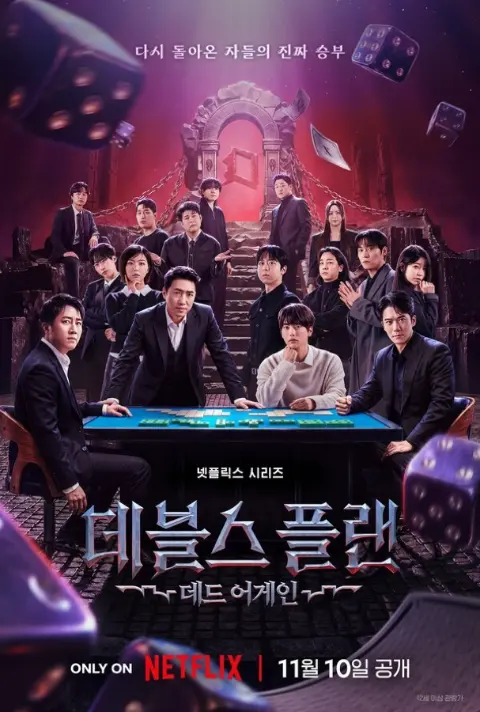
The Devil's Plan: Dead Again
NetflixNetflix’s third season of The Devil’s Plan brings 16 contestants into a 14-episode brain-game competition. Find the release schedule, cast, revised elimination rules and official viewing guide.